One Woman, One Flat (一樓一鳳): How Hong Kong Law Shapes Every Booking
Selling sex isn’t a crime in Hong Kong, but a flat used by two is a “vice establishment”. How 一樓一鳳 works, what is illegal and what it means for you.
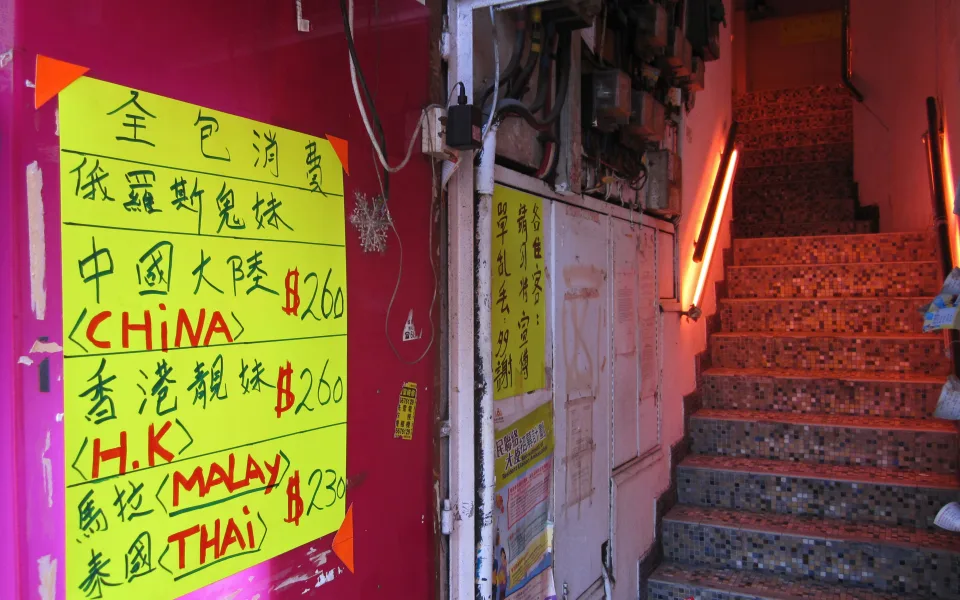
Walk along Portland Street after dark and you may notice pink lights at the foot of narrow staircases. Behind many of them is a set-up Hong Kong has its own name for: 一樓一鳳, “one floor, one phoenix”, meaning one woman working on her own in her own flat. It is not a tradition or a coincidence. It is the shape the law gives the trade, and once you know the rules, a lot about booking in Hong Kong makes sense.
This is general information, not legal advice. Laws change, so check the current text before you rely on it.
The short answer
Selling sex is not a crime in Hong Kong. The Secretary for Security told the Legislative Council so in 2015:
The act of prostitution itself is not illegal
. Police go after
people who control sex workers for prostitution and keep vice establishments
, not the women themselves, unless they solicit in public or break the conditions of their stay. A 2008 government paper adds that running a
one sex worker apartment
is not prohibited either.
Part XII of the Crimes Ordinance, the part that deals with prostitution, has no offence aimed at a client who pays a consenting adult. That does not make everything around a booking legal, as the rest of this page shows.
Why one woman, one flat
It all turns on one definition. Under the Crimes Ordinance (Cap. 200), a place is a
vice establishment
when it is
used wholly or mainly by 2 or more persons for the purposes of prostitution
(s.117(3)). Keeping or managing one carries up to 10 years in prison (s.139), and owners or tenants who knowingly let a flat be used that way face up to 7 years (s.143–145).
The arithmetic follows. One woman working for herself in her own flat falls outside the definition. Add a second woman working from the same flat, or someone who runs the place, and it becomes a vice establishment. The law said “2 or more women” when it was written in 1978. Since 1991 it says “persons”, so the rule is the same for everyone.
The government has called the result
a reasonable balance
: sex workers can work alone, while organised brothels stay illegal. Hence 一樓一鳳, in Cantonese
jat1 lau4 jat1 fung6. The phoenix, 鳳, is an old polite word for a woman in the trade. A 2019 district council paper describes the streets around Portland, Reclamation, Shanghai and Hamilton Streets in Yau Ma Tei as a long-standing cluster of these flats, many of them in subdivided units.
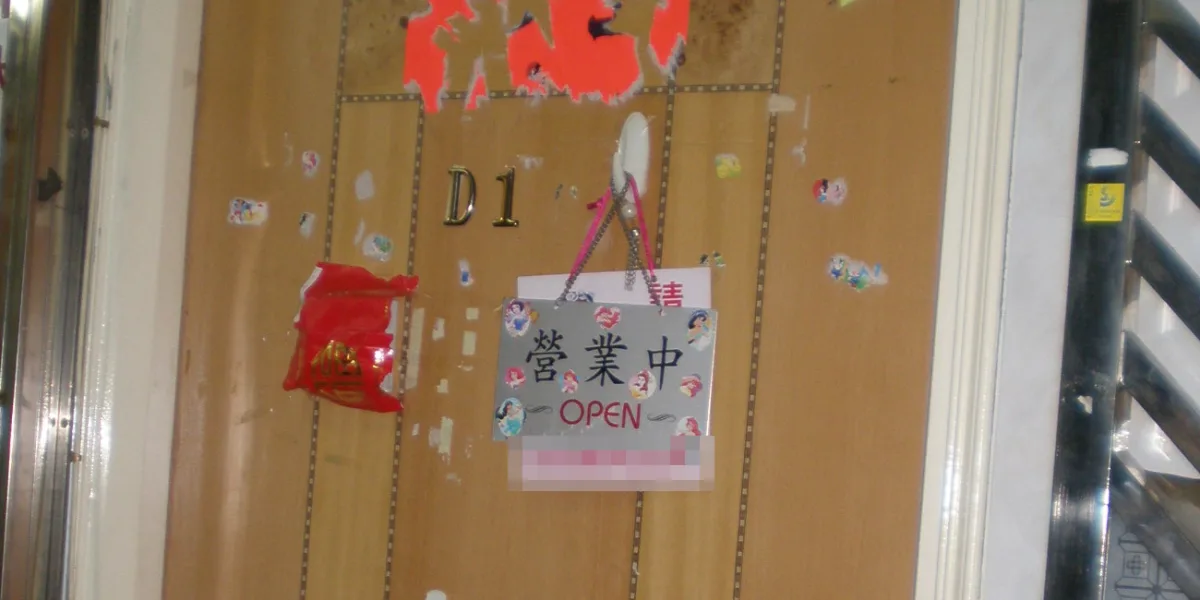
Several doors, one business
Courts look at how a place is really run, not at the number on the door. In a 2008 case the court found that a vice establishment can be made up of several flats, in that case on different floors of one building. In 2013 the Court of Appeal heard owners argue that their subdivided rooms were separate one-woman flats. It said the question is decided on
the totality of the evidence
and that a court is
not bound to accept a factual circumstance at face value
. One woman per room only counts when each woman really works for herself.
Where the signs went
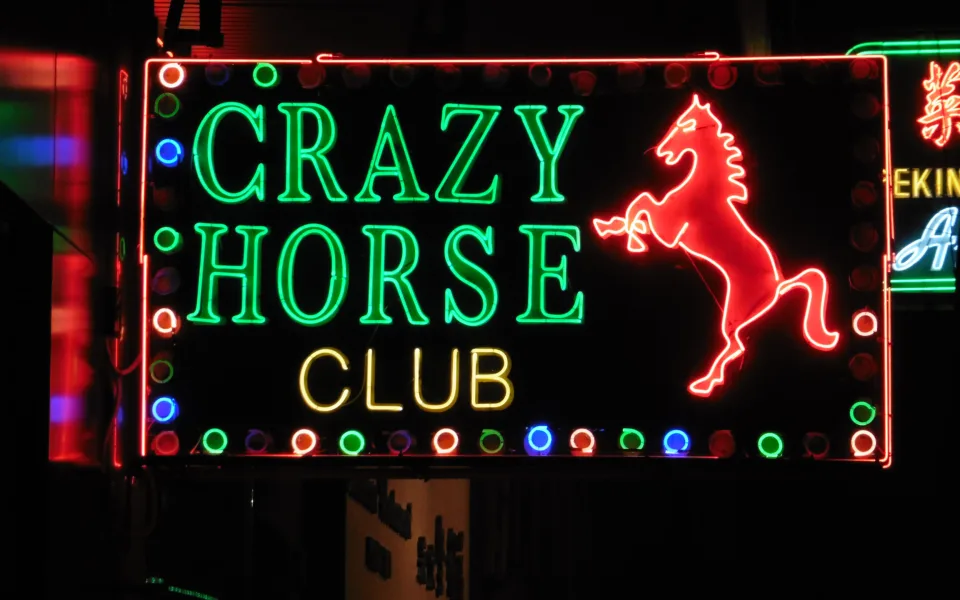
A 1990 amendment made it an offence to display a sign that advertises the services of a prostitute where the public can see it, and that includes the common parts of a building, such as the entrance and the stairs (s.147A, up to 12 months in prison). Police took down thousands of vice signboards in Mong Kok in the 1990s, 2,651 in 1996 alone. The explicit yellow light boxes are gone. These days a pink light at the bottom of the stairs often does the job, as in the photo at the top of this page, taken on Portland Street in 2012.
What is against the law, for everyone
-
Soliciting in public.
Offering or asking for sex
in a public place or in view of the public
is an offence for anyone, clients included: a fine of up to HK$10,000 and 6 months in prison (s.147). - Running a brothel. Keeping or helping to manage a vice establishment: up to 10 years (s.139).
- Living off her earnings. Up to 10 years (s.137). Anyone who lives with a sex worker or is habitually in her company is presumed guilty unless they prove otherwise.
- Control and recruitment. Controlling someone for the purpose of prostitution: up to 14 years (s.130). Procuring someone to become a prostitute: up to 10 years (s.131).
- Anyone under 16. Sex with a person under 16 is a crime even with their consent (s.124). Using anyone under 18 for pornography or a live sex show is a crime too (s.138A).
- Cameras. Since 8 October 2021, secretly filming or photographing someone in an intimate setting, or publishing or threatening to publish an intimate image without consent, carries up to 5 years (s.159AAB–159AAE). Agreeing to a photo is not agreeing to it being shared.
What it means when you book
- Arrange it in private. Use the contacts on a listing, not a street corner: soliciting in a public place is an offence for clients too.
- Expect one woman in her own place. Of the 451 listings on Eros Hong Kong, 349 offer incall, which means you go to her. That is the one-woman model this page describes.
- Adults only. Never meet anyone under 18. If anyone seems underage, leave.
- Watch for a third party. If someone else seems to hold her phone, her passport or her money, or she does not seem free to say no, do not go ahead. If someone is in danger, call 999.
- Phones away. No photos or video without a clear yes, and never share them.
Next up
Ready to choose? Start with the first-timer’s guide, then decide between incall and outcall. Planning a night out instead? Read what Hong Kong’s strip clubs really are.
Sources
- Crimes Ordinance (Cap. 200), Hong Kong e-Legislation
- LCQ5: reply by the Secretary for Security, 28 October 2015
- Paper by the Security Bureau and the Police to the LegCo Panel on Security, June 2008
- Government press release on the Crimes (Amendment) Ordinance 2021, 8 October 2021
By the Eros Hong Kong editors. Law checked against the Crimes Ordinance on Hong Kong e-Legislation and government papers, October 2026. Listing counts are from the site’s own listings, October 2026.
Photos from Wikimedia Commons, cropped: cover (Portland Street, 2012) by istolethetv, CC BY 2.0; flat door (Kowloon, 2008) by BrokenSphere, CC BY-SA 3.0, website address blurred.